Home›TITLE: Thai Lottery Winner Fakes His Death — IRS F…
TITLE: Thai Lottery Winner Fakes His Death — IRS Finds Him in 3 Months
EEditorial Team2026-09-10👁 11 views
Share:✅ Copied!
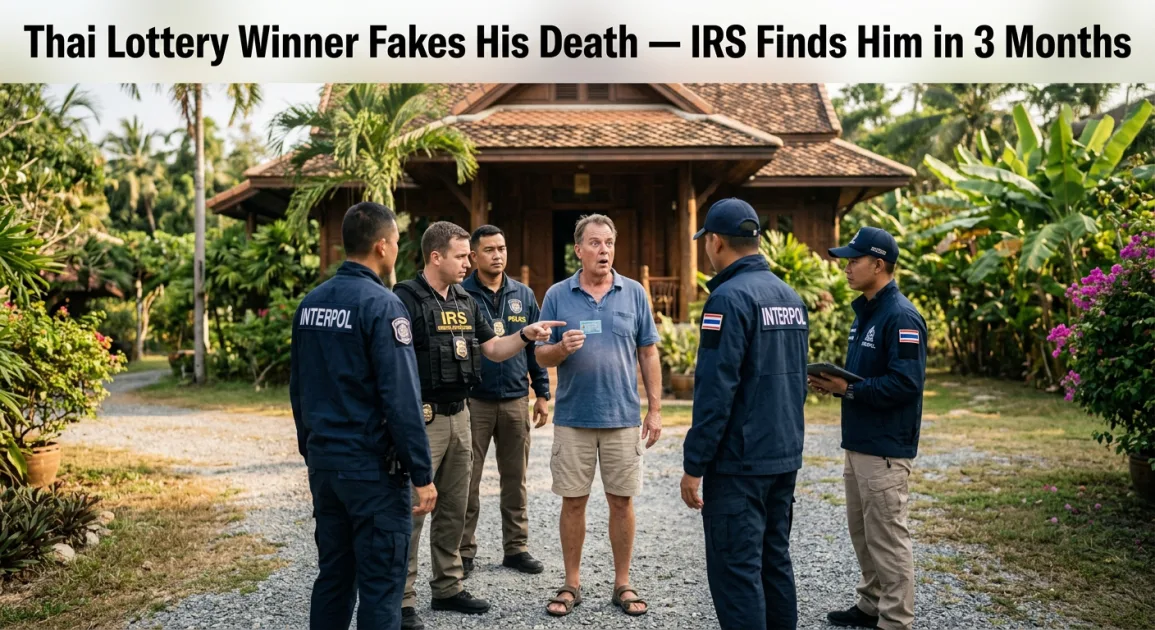
In the summer of 2023, the American embassy in Bangkok received a death certificate for one Marcus Theodore Webb — a 54 year old US citizen who had been living in Thailand for nine years and who had, according to the official Thai government document, drowned in a diving accident off the coast of Koh Samui. Webb's family in Phoenix received a carefully worded email expressing his final wishes. His Bangkok landlord received three months advance rent and a termination notice. And the Internal Revenue Service, which had been quietly building a criminal tax evasion case against Webb for fourteen months based on nearly $2.2 million in unreported Thai Government Lottery winnings, received nothing at all. Ninety one days later, IRS Criminal Investigation special agents and Interpol officers located Marcus Theodore Webb alive and remarkably well in a rented villa outside Chiang Rai — living under a false identity that had taken him eight months and approximately $60,000 to construct.
Webb had won his Thai lottery prizes across a six year period while working as an independent financial consultant in Bangkok. His total winnings exceeded $2.2 million across four separate significant prizes. He had reported none of it to the IRS. He had filed no FBAR reports for any of the five Thai bank accounts he had used to hold and transfer his lottery funds. And when he received his first IRS Criminal Investigation contact letter in early 2023, he made the decision that transformed a serious but potentially manageable tax compliance problem into one of the most comprehensive federal criminal cases an American expat has ever generated from Southeast Asia.
The fake death scheme Webb constructed was elaborate by any measure. He obtained fraudulent Thai death certificates through corrupt local contacts. He arranged for a Thai attorney to formally notify the US embassy of his supposed death. He transferred his remaining Bangkok bank funds into accounts held under his false identity through a series of cryptocurrency conversions designed to break the financial paper trail connecting his true identity to his lottery funds. He purchased a new mobile phone, established new social media accounts under his false name, and relocated to a remote area outside Chiang Rai where he believed his American identity would attract minimal attention from local authorities.
📰 Next Article
Madres Denuncian: Fotógrafo No Entregó Fotos de Quinceañera
Madres Denuncian: Fotógrafo No Entregó Fotos de Quinceañera
Aquí está el artículo en español:
Dos madres denuncian a un fotógrafo que cobró por adelantado y nunca entregó las fotos de las quinceañeras de sus hijas.
Madres Denuncian que Nunca Recibieron las Fotos de la Quinceañera de sus Hijas
Fotógrafo cobró por adelantado y desapareció sin entregar el material prometido
— Dos madres de familia compartieron su frustración y enojo al denunciar públicamente que un fotógrafo contratado para capturar uno de los momentos más especiales en la vida de sus hijas — la quinceañera — jamás les entregó las fotografías prometidas.
Ambas mujeres aseguran haber pagado por adelantado los servicios del fotógrafo, quien estuvo presente durante las celebraciones y capturó imágenes del evento. Sin embargo, tras la fiesta, el profesional dejó de responder mensajes y ll...
The IRS found him through a method Webb had never considered. His false identity documents — purchased through a network of corrupt Thai officials — had been generated using a Thai national identification number that belonged to a living Thai citizen who had reported the identity theft to Thai authorities eight months earlier. Thai police investigating the identity theft had flagged the false documents in a national database that Interpol's Bangkok liaison office accessed routinely as part of ongoing cooperation with US federal law enforcement. When IRS Criminal Investigation agents submitted a formal Interpol request to locate Webb following the suspicious embassy death notification, the flagged false identity documents produced an immediate address match within 72 hours of the Interpol request being filed.
Federal prosecutors charged Webb with tax evasion, willful failure to file FBAR reports, obstruction of a federal investigation, fraudulent use of false identity documents, and conspiracy to defraud the United States government. The obstruction charge alone — based entirely on the fake death scheme — added a potential five year federal prison sentence on top of the underlying tax charges. His defense attorneys faced an evidence package that included the fraudulent death certificates, the cryptocurrency transfer records, the Interpol identity theft database match, and four years of federal tax returns showing zero foreign income against FATCA data confirming seven figure Thai account balances.
Webb ultimately pleaded guilty to all primary charges in exchange for a consolidated sentencing recommendation. He was sentenced to 38 months in federal prison, three years of supervised release, and ordered to pay $1.6 million in back taxes, FBAR penalties, obstruction fines, and interest — consuming nearly three quarters of his total Thai lottery winnings. His fake death cost him more than his unreported taxes ever would have. A qualified federal tax defense attorney retained at the moment he received his first IRS contact letter — before he constructed his fatal scheme — almost certainly could have resolved his entire tax exposure for a fraction of what his obstruction of justice ultimately cost him in prison time and financial penalties.
Disclaimer: This article is for general informational purposes only and does not constitute legal or tax advice. The case details described are illustrative in nature. Readers should consult a licensed federal tax defense attorney regarding their specific situation.